Eligibility Requirements
To prioritize the safety and well-being of donors and patients, there are blood donation requirements that donors must meet based on their intended donation method. You must be in good health at the time you donate, and can’t donate if you have a cold, flu, sore throat, cold sore, stomach bug, or any other infection. Learn more about other eligibility criteria below, along with how iron and hemoglobin levels affect your eligibility.
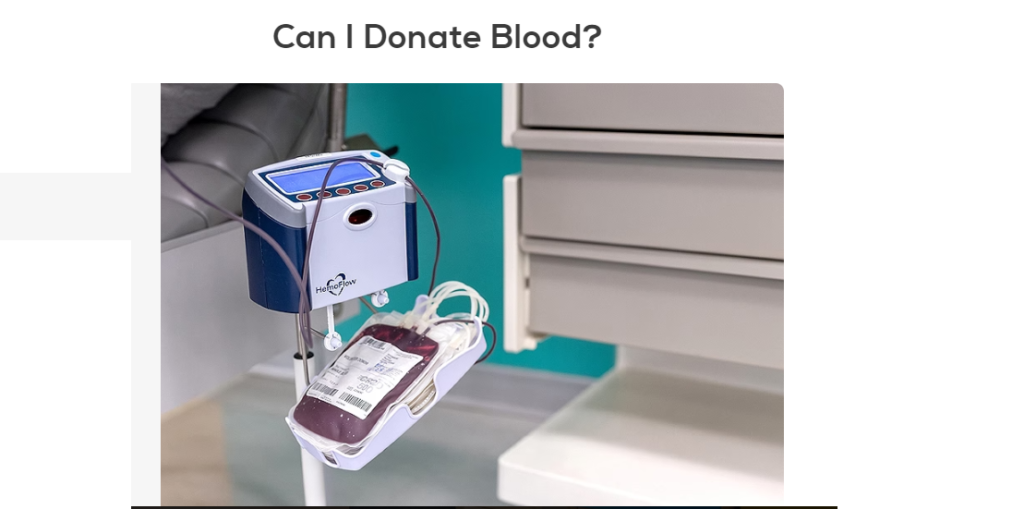
Whole Blood
Whole blood donation is the method that individuals are most familiar with. This process collects a pint of blood containing red blood cells, white blood cells, platelets, and plasma in a single session.
Age and Weight Requirements: You must be 16 years old and weigh at least 110 pounds. If you are 16 years old (in NC 16 or 17 years old) you need this parental consent form.
How Often Can I Donate Whole Blood? You can donate every 56 days for a total of 6 donations a year.
Double Red Cells
A double red cell donation only collects red blood cells, excluding platelets and plasma. This specialized process, known as automation or apheresis, focuses specifically on extracting red blood cells.
Age and Weight Requirements: Males: Must be at least 17 years old weigh at least 130 pounds, and be 5’1” or taller. Females: Must be at least 19 years old, weigh at least 150 pounds, and be 5’5” or taller.
How Often Can I Donate Double Red Cells? Every 112 days for a total of 3 donations a year.
Platelets
A platelet donation only collects platelets, returning the rest to you. This specialized donation process is known as automation or apheresis.
Age and Weight Requirements: You must be at least 17 years old and weigh at least 110 pounds.
How Often Can I Donate Platelets? You can donate platelets every seven days. We recommend donating every 14 days. You can give up to 24 times a year.
Do not take aspirin or any products containing aspirin for at least two full calendar days before your appointment.
Eligibility Frequently Asked Questions
- What is the age requirement to donate blood?
You must be at least 16 years old to donate blood (17 in North Carolina). All 16-years-olds must provide a signed parental/guardian consent form to donate. Some schools may require a signed consent form for 17-year-olds. Please check with your school for details.
- What is the weight requirement to donate blood?
You must weigh at least 110 pounds to donate whole blood. For a double red cell donation, men must weight at least 130 pounds and be 5’1″ or taller; women must weigh at least 150 pounds and be 5’5″ or taller.
- Can I donate blood if I have low blood pressure?
Yes, as long as you feel well and your blood pressure at the time of donation is at least 90 systolic (first number) and 50 diastolic (second number).
- Can I donate blood if I have high blood pressure?
Yes, as long as you feel well and your blood pressure at the time of donation is below 180 systolic (first number) and 100 diastolic (second number). Taking medication to control high blood pressure does not prevent you from donating blood.
- What does the term deferred donor mean?
OneBlood is regulated by the Food and Drug Administration (FDA). As such, each donor must meet certain eligibility requirements in order to donate blood. If a donor does not meet one or more of the eligibility requirements, they would be deferred from donating that day.
- If I was deferred in the past from donating, am I able to donate in the future?
It depends on the reason you were deferred. Some deferrals are temporary, and others are permanent. For example, if a donor’s iron count is too low, they would be temporarily deferred until they are able to get their iron levels into the necessary range by eating iron-rich foods. Visit our Am I Eligible page for more information
- Can I donate blood if I have low iron or anemia?
If you present to donate and have a low iron count, you will not be eligible to donate blood. We understand that rescheduling can be frustrating, but your health and safety is a top priority. Low iron is one of the most common reasons for deferral from donating blood.
When your iron is low, donating blood will cause your levels to drop even further, leaving you feeling tired and faint. It also affects your ability to generate new red blood cells and can cause a longer recovery time. Eating certain types of red meat, fortified cereal, and leafy green vegetables may help increase your iron count. Find out more about low iron and blood donations here.
- Can I donate blood if I have asthma?
Yes, as long as you have no limitations on daily activities and are not having difficulty breathing at the time of donation. Medications for asthma does not disqualify you from donating.
- Can I donate blood if I am on birth control?
Donors taking oral contraceptives and those using other forms of birth control are eligible to donate.
- Can I donate blood if I have diabetes?
Diabetics whose illness is well controlled on insulin or oral medications are eligible to donate.
- Can I donate blood if I am on insulin?
Donors with diabetes who take any kind of insulin are eligible to donate as long as their diabetes is well controlled
- Can I donate blood if I have/ had cancer?
Most localized skin cancers are not a reason to stop you from donating blood. Because many different types of cancer exist, we will ask you a few questions regarding your diagnosis, and in some cases the blood center medical director may make the final determination on the deferral. Most often, people who are free of relapse a year after completion of treatment are able to donate blood.
- Can I donate blood if I recently got a tattoo or body piercing?
People who received a tattoo at a state-licensed and regulated facility are now eligible to donate blood once the area has healed. People who received a tattoo at a non-regulated facility must wait 3 months before they can donate blood.
- Can I donate blood if I am pregnant?
Pregnant women are not eligible to donate blood, but they become eligible 6 weeks after giving birth. Women who are nursing are encouraged to drink plenty of water both before and after donating blood.
- Can I donate blood if I recently had a surgery or minor illness?
Donors must feel well at the time of the blood donation, so a cold, flu, or allergies may temporarily prevent someone from donating blood. Donors must wait at least 24 hours after many minor surgeries, including dental work, before donating. Donors should rely on our screening process to determine surgery or illness deferrals. In some cases, the blood center medical director may make this determination.
- Can I donate blood if I recently received a flu shot?
Yes, you can donate any time after receiving a flu vaccine.
- Can I donate blood if I am taking medication?
Most medications do not disqualify you from donating blood; however, the condition you are being treated for or medication you are taking may result in you being deferred from donating blood. See below for a general list of medications that could impact your ability to donate blood.
- Can I donate blood if I smoke weed/marijuana?
The use of cannabis does not disqualify an individual from blood donation, but potential donors cannot give if their use of cannabis impairs their memory or comprehension.
- What is the FDA blood donor deferral policy regarding men who have sex with men (MSM)?
On August 21, 2023, OneBlood implemented the U.S. Food and Drug Administration’s (FDA) new individual donor assessment guidance for all blood donors.
- What is the Variant Creutzfeldt-Jakob Disease (vCJD) or Mad Cow deferral?
If you were once deferred from donating blood for geographic risk factors related to variant Creutzfeldt-Jakob disease (vCJD), commonly known as “Mad Cow” disease, we are excited to share that you are now ELIGIBLE to be a blood donor.
- Am I eligible for automated donation?
Donors must meet the same eligibility requirements as a whole blood donor. In addition, because aspirin affects the coagulation function of platelets, automated donors are asked not to take aspirin or aspirin-like products (Advil, Motrin or Ibuprofen) 48 hours prior to the scheduled appointment.
Please feel free to discuss your eligibility for this program with one of our phlebotomists at any time before, during or after your whole blood donation.
- Do I have enough blood in my body to donate?
Yes. The body contains 10 to 12 pints of blood. Your whole blood donation is approximately 1 pint.
QUICK LINKS